Architecture & Urban Planning

Architects, planners, and builders who shaped the physical spaces we inhabit.

27 entries

Scroll to see where you are.

Nubia (present-day Sudan)

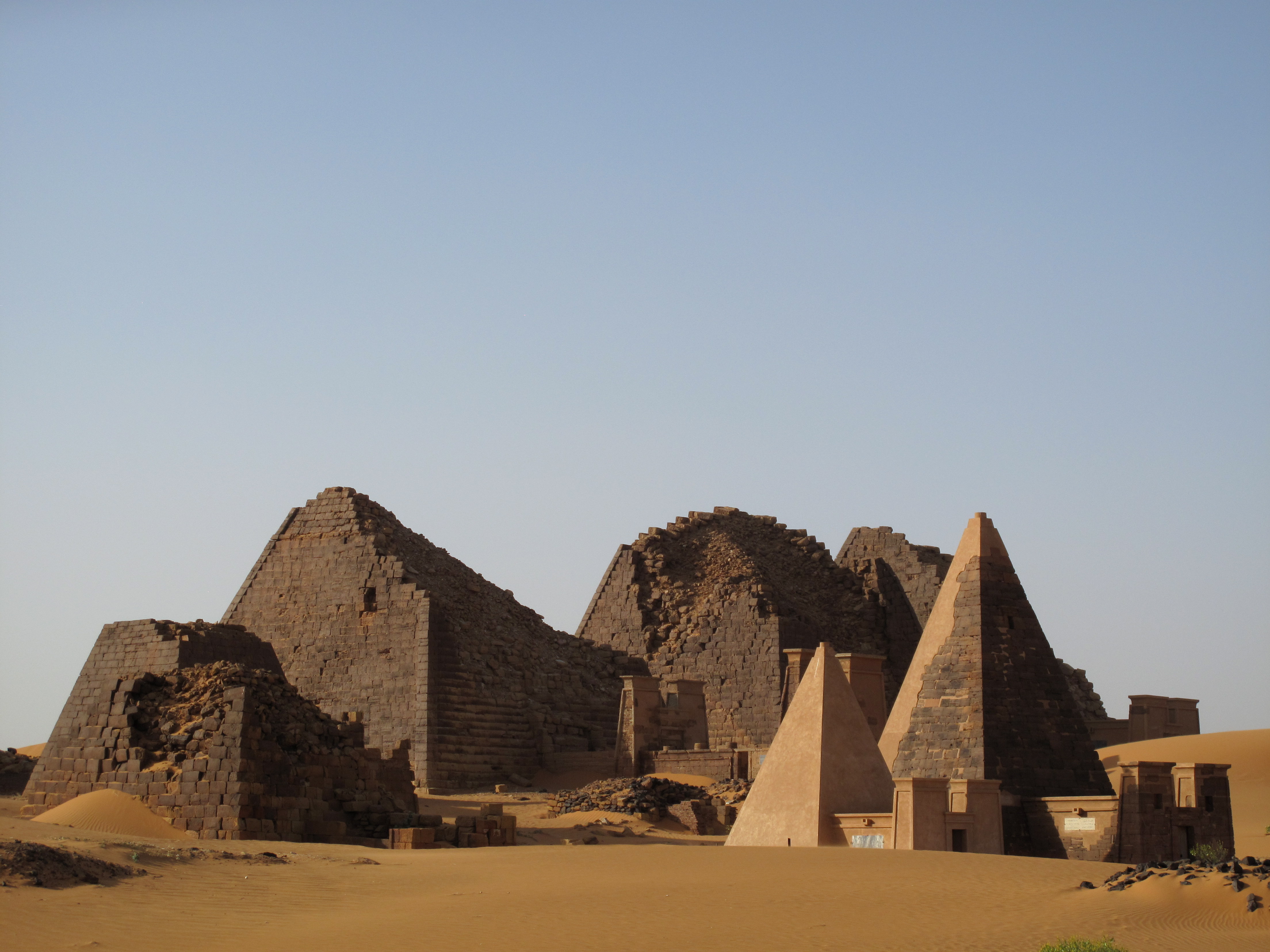
Nubian Pyramid Builders (Kushite Kingdom)

The Kushite rulers of the 25th Dynasty and their successors commissioned and built more than 200 pyramids at Meroë, Nuri, and El-Kurru - a total that exceeds the number of Egyptian pyramids. The Meroitic pyramid form is architecturally distinct from its Egyptian predecessors: steeper pitch, smaller footprint, and integrated mortuary chapels whose carved relief programs document a specifically Nubian cosmological tradition.


Western architectural history’s consistent classification of these structures as derivative of Egyptian precedents, rather than as a distinct architectural tradition, reflects a Nile-valley hierarchy that positions Egypt as the origin point of African monumental architecture and suppresses the independent development and continuity of Nubian building knowledge.

East African Coast (present-day Tanzania)

Swahili Master Builders - Kilwa Kisiwani

The stone town of Kilwa Kisiwani on the Tanzanian coast developed a specifically East African synthesis of African structural logic, coral stone masonry, and carved lime plaster work that colonial archaeologists from the 19th century onward attributed to Arab, Persian, or Indian origin.


The Husuni Kubwa palace complex at Kilwa, built c. 1310–1330, contains an octagonal bathing pool, multi-domed audience halls, and a coral-stone vault system developed by East African builders. UNESCO designated Kilwa Kisiwani a World Heritage Site in 1981; the attribution debate - who built these structures and what intellectual tradition they belong to - remained active in architectural history scholarship well into the late 20th century, with the African synthesis hypothesis consistently marginalized.

Zimbabwe

Shona Builders

The Great Enclosure at Great Zimbabwe, its walls reaching 11 meters in height, 5 meters thick at the base, and extending 250 meters in circumference, was constructed by Shona-speaking peoples without mortar, using a dry-stone technique that achieves structural stability through careful coursing of granite blocks. From the 1870s onward, colonial officials, journalists, and archaeologists produced a sustained literature attributing Great Zimbabwe to Phoenicians, ancient Arabians, the Queen of Sheba’s builders, or other non-African origins.


This denial was not merely academic: Rhodesian government policy from the 1960s actively suppressed the work of archaeologists (including Peter Garlake, who was expelled from Rhodesia for insisting on African authorship) who documented the Shona construction. The political stakes of the attribution debate, Black Africans were administratively excluded from the country named for the ruins, made Great Zimbabwe a specific case in which the erasure of African architectural authorship served a racial colonial order.

Ethiopia

Terraced Landscape Builders

The terraced agricultural landscapes of the Ethiopian Highlands - the kundi (stone-walled field terraces) of the Tigray plateau and the earthen bunds of the Amhara highlands - represent centuries of engineered landscape modification that redirected rainfall, controlled erosion, and expanded cultivable area across steep terrain.


The construction of these terraces involved earthmoving at a scale comparable to the engineering projects of the ancient Mediterranean, performed by farming communities without state direction or institutional organization. Landscape architecture as a discipline includes terraced agricultural landscapes in its history when they occur in Asia (the Banaue rice terraces of the Philippines are a UNESCO World Heritage Site) but has not consistently applied the same analytical framework to the Ethiopian Highlands terraces, whose African authorship places them outside the discipline’s standard canon.

Ethiopia

Lalibela Builders

The rock-hewn churches of Lalibela, eleven monolithic structures carved downward into the basalt plateau of the Ethiopian Highlands, represent a structural and spatial achievement whose scale and precision have no parallel in sub-Saharan Africa. The largest, Bete Medhane Alem, is approximately 33 meters long, 23 meters wide, and 11 meters tall - carved from a single piece of rock.


The Zagwe builders cut the churches from the living rock, removing all material around and beneath each structure to produce freestanding buildings still connected to the plateau only at their base. Ethiopian ecclesiastical tradition attributes the construction to King Lalibela with angelic assistance; 20th-century architectural historians from outside Ethiopia consistently sought alternative explanations for the construction, including the involvement of Templar Knights or Egyptian Coptic artisans - attributions the archaeological evidence does not support.


UNESCO designated Lalibela a World Heritage Site in 1978.

Mali

Dogon and Tellem Builders

The Tellem people - predecessors of the Dogon in the Bandiagara Escarpment of present-day Mali - constructed granaries, dwellings, and mortuary structures in the upper cliffs of the escarpment at heights that remain technically difficult to access today, using earthen brick and timber.


Dogon builders subsequently developed a settlement pattern in which the village’s spatial organization mirrors the human body: the toguna (men’s meeting house), the family compounds, the altars, and the granaries are arranged according to a cosmological spatial logic documented by the ethnographer Marcel Griaule in the 1930s and contested by subsequent scholars. The Dogon mason guild maintains construction knowledge passed through apprenticeship with no written technical manual.


UNESCO designated the Falaise de Bandiagara a World Heritage Site in 1989.

Mali

Bozo Mason Guild

The Great Mosque of Djenné, the world’s largest mud-brick structure, stands on foundations that oral tradition and archaeological evidence date to the 13th century; the current structure was rebuilt by the Bozo mason guild in 1907 on the instructions of the French colonial administration. The mosque’s construction technique - earthen brick (adobe) reinforced with palm-fiber plaster and articulated by wooden structural members called toron that project from the façade and serve as permanent scaffolding - encodes the Bozo guild’s accumulated structural knowledge in the building’s material fabric.


Each spring, the entire community participates in a re-plastering festival (crépissage) organized by the Bozo guild, which functions as both a maintenance operation and a transmission of building knowledge. UNESCO designated Djenné a World Heritage Site in 1988; the maintenance tradition is documented by UNESCO as endangered because the guild’s membership is declining and the knowledge has no written record.

Algeria, Morocco, Mauritania, Mali

Ksar Builders

The ksar (plural ksour) is a fortified earthen village form developed across the Saharan and sub-Saharan zone that organizes residential, commercial, and defensive functions within a continuous earthen wall punctuated by a single fortified gate. The ksour of the M’Zab Valley in Algeria, built by the Ibadi Berber community from the 11th century onward, organize five towns in a pattern that distributes water, commerce, and social life according to a specific spatial logic. The ksour of the Draa Valley in Morocco integrate palm grove agriculture, fortified storage, and residential quarters in a continuous earthen fabric.


UNESCO designated the M’Zab Valley a World Heritage Site in 1982 and the ksar of Aït-Ben-Haddou a World Heritage Site in 1987; the earthen construction knowledge that maintains these structures is held by local mason communities with no formal institutional support.

Nigeria

Yoruba Urban Builders

The Yoruba urban tradition produced cities of 20,000–100,000 inhabitants organized around the agbo-ile (family compound): a cluster of rectangular rooms arranged around a central courtyard, with the entrance controlled by the family head’s quarters, that organizes extended family life, commercial activity, religious shrines, and burial practices in a single spatial unit.


The Yoruba city of Ile-Ife, the cosmological origin point of Yoruba civilization, was organized as a network of these compounds linked by roads. The Ooni’s palace at Ile-Ife, documented by European travelers in the 17th century, contained multiple courts, audience spaces, and sacred enclosures. Yoruba spatial logic - the compound as the basic unit of social organization, the threshold as the locus of spiritual power, the courtyard as the mediating space between household and street - persisted through the Atlantic slave trade and continues to organize spatial practice in diaspora contexts in Brazil and Cuba.

Ghana

Ashanti Royal Builders

The Ashanti kingdom developed a specific architectural tradition in which the royal palace in Kumasi (the Manhyia Palace and its predecessors), the chief’s palace in each community (ahemfie), and the community’s meeting house (nhyiamu) were organized as a system of graduated spatial authority. Ashanti buildings used wooden structural frames with clay infill and elaborate carved and painted facade programs; the decorative vocabulary - geometric patterns in red, white, and black - encoded social and cosmological information.


British colonial forces destroyed Kumasi and its buildings four times (1874, 1896, 1900, and 1901); each destruction was specifically intended to erase the material basis of Ashanti sovereignty. An Ashanti architectural tradition that had produced sophisticated spatial forms over four centuries was systematically demolished as an act of colonial politics.

Brazil

Aleijadinho (António Francisco Lisboa)

Aleijadinho, “the little cripple,” a name reflecting the degenerative disease (possibly leprosy or syphilis) that eventually left him without the use of his hands, was the son of a Portuguese architect and an enslaved African woman, and he produced the defining works of Brazilian Baroque architecture and sculpture. His Church of São Francisco de Assis in Ouro Preto (completed 1794) and his sculptural program for the Sanctuary of Bom Jesus de Matosinhos in Congonhas, 12 life-size soapstone prophets and 66 polychrome cedar figures of the Passion, are UNESCO World Heritage sites.


Working as a free mulato craftsman in colonial Brazil, Aleijadinho operated under the specific racial restrictions of the colonial social order while producing work that the Brazilian state would later claim as its defining national cultural heritage. His architectural and sculptural knowledge was transmitted through his workshop, not through any institutional training he could access.

USA

Thomas Day

Thomas Day was a free Black furniture maker and carpenter in Milton, North Carolina, whose workshop produced furniture, interior woodwork, and architectural millwork for the antebellum white elite of the state. His workshop designed and installed the carved newel posts, balusters, and stair rails of plantation houses whose owners would not permit Day to sit at their tables.


Day’s commercial success, he employed white workers in his shop, which violated North Carolina norms, made him one of the wealthiest Black craftsmen in the antebellum South while he remained subject to the legal restrictions on free Black life, including a requirement to post bond for his good behavior. His work is held in the collections of the North Carolina Museum of History, and his home and workshop in Milton are a National Historic Landmark.

USA

Robert R. Taylor

Robert Robinson Taylor was the first African American to graduate from the Massachusetts Institute of Technology’s architecture program (class of 1892), having been admitted after an examination that he passed with the highest score among applicants. He was recruited by Booker T. Washington to serve as Tuskegee Institute’s first architect in 1892 and designed more than two dozen buildings on the Tuskegee campus - including Tantum Hall, Emery Hall, and the Carnegie Library - that collectively established the HBCU campus as an architectural project demonstrating Black institutional capacity.


His Tuskegee buildings were constructed largely by Tuskegee students in a program that fused architectural education with craft training. Taylor’s name was largely absent from standard histories of American architecture until the 2011 publication of Ellen Weiss’s “Robert R. Taylor and Tuskegee.”

USA

John A. Lankford

John Anderson Lankford was one of the most productive Black architects in the early 20th-century United States, designing buildings across the South and Mid-Atlantic for Black churches, fraternal organizations, and HBCU institutions. His design of the True Reformer Building in Washington, D.C. (1903), a large commercial, civic, and social building housing the offices and meeting halls of the United Order of True Reformers, a Black fraternal insurance and banking organization, was one of the first large commercial buildings in Washington financed, designed, and built by Black people. He designed buildings for Howard University, Shaw University in Raleigh, and dozens of Black churches throughout the South.


His career documents the specific geographic and institutional scope of early Black architectural practice: a practice built entirely on Black institutional patronage in a professional environment that excluded Black architects from white clients and white professional organizations.

USA

Julian Abele

Julian Abele trained at the Pennsylvania Academy of Fine Arts and the École des Beaux-Arts in Paris, where he was the first Black American to receive a diploma from that institution. Returning to the United States, he worked as a designer for the Philadelphia firm of Horace Trumbauer, where he was responsible for the design of a substantial portion of the firm’s output - including the entirety of Duke University’s West Campus in Durham, North Carolina (begun 1924), whose Gothic revival ensemble of stone buildings is considered among the finest examples of collegiate Gothic in the United States.


Abele’s authorship of the Duke campus was denied by the firm and by Duke during his lifetime: he was refused entry to the campus as a Black man during the segregated era and did not receive public acknowledgment from Duke until 1986, when an inquiry by students and faculty established his design role.

USA

Vertner Tandy

Vertner Woodson Tandy became New York State’s first licensed Black architect in 1909, having trained at Cornell University and the Tuskegee Institute. His design of Villa Lewaro in Irvington-on-Hudson, New York (1918), the mansion of Madam C.J. Walker, the first Black self-made millionaire woman in the United States, produced a neoclassical estate house that functioned as a statement of Black economic achievement in the country’s most visible register: the American country house.


Tandy also designed the St. Philip’s Episcopal Church in Harlem (1910–1911) and residential buildings throughout New York, designing for a client base that was almost entirely Black in a city where professional architecture was almost entirely white. He co-founded Alpha Phi Alpha, the first Black college fraternity, at Cornell in 1906, before his architectural career began.

USA

Paul R. Williams

Paul Revere Williams was licensed as an architect in California in 1921 and established a practice in Los Angeles that designed hundreds of residential, commercial, and civic buildings - including the homes of Frank Sinatra, Lucille Ball, Lon Chaney, and other Hollywood celebrities, as well as the Los Angeles International Airport’s landmark Theme Building (1961).


Unable to live in the Bel-Air, Brentwood, and Beverly Hills neighborhoods where his clients resided due to racially restrictive covenants, Williams developed the practice of drawing plans upside-down so he could present them across a table to white clients without the social impropriety of sitting beside them. He was one of the first Black members of the American Institute of Architects and the first Black Fellow of the AIA (1957), elected after decades in which the organization’s chapters excluded Black architects. His exclusion from his own clients’ neighborhoods documents the specific contradiction of Black professional achievement within racially structured American space.

Washington, D.C.

Hilyard Robinson

Hilyard Robinson trained at Columbia University’s architecture program and the University of Pennsylvania and established a practice in Washington, D.C. that designed buildings for Howard University (including the Founders Library, 1939, now a National Historic Landmark) and for the Langston Terrace public housing project (1938), one of the few early public housing projects designed by a Black architect for a Black community.


The Langston Terrace project is notable in American housing history both for its design quality - a curvilinear arrangement of attached row houses and apartments with an integrated sculpture program and community spaces - and for its intended community: it was built for Black residents in a segregated city during the New Deal era. Robinson was also a Harlem Renaissance figure, a member of the Howard faculty, and a designer whose modernist sympathies placed him in the progressive wing of American architectural practice.

USA

John S. Chase

John Saunders Chase was the first Black licensed architect in Texas (1952), having been denied admission to the University of Texas School of Architecture because of its racial exclusion policy and completing his degree at Hampton Institute and the University of Texas under legal pressure. His Houston practice designed hundreds of buildings - residential, commercial, and institutional - over a 40-year career; he designed buildings for Texas Southern University, Prairie View A&M, and other HBCUs in Texas.


His appointment by President Lyndon B. Johnson as a member of the United States Commission of Fine Arts, the body that advises on the design of public buildings and monuments in Washington, D.C., made him the first Black member of that body. His career documented the specific geography of Black architectural practice in the South: a licensed professional excluded from the state’s flagship architecture school by racial policy, practicing in a racially segmented professional market.

USA

Norma Sklarek

Norma Merrick Sklarek became the first Black woman licensed as an architect in New York (1954) and later California, then the first Black woman elevated to AIA Fellow (1980) after leading large teams on LAX Terminal 1, the U.S. Embassy in Tokyo, and Fox Plaza. Gruen Associates and Welton Becket relied on her technical coordination when sexist offices sidelined other women.


Colleagues nicknamed her “the Rosa Parks of architecture” for refusing to accept back-room drafting roles once her exams proved jurisdiction-level competence.


As co-founding principal of Siegel Sklarek Diamond, she modeled Black women–led firms bidding public works at scale, expanding what mentorship looks like when licensure pipelines still leak talent at every exam sitting.

USA

Sharon Sutton

Sharon Egretta Sutton trained in architecture and urban planning and developed a practice of community design that specifically centered Black communities’ agency in decisions about their built environment. Her methodology (participatory planning processes that engaged community members as co-designers of proposed interventions in their neighborhoods) challenged both the paternalistic urban renewal tradition and the architectural profession’s assumption that design expertise is held exclusively by licensed professionals.


Her scholarship, including “Weaving a Tapestry of Resistance: The Places, Power, People, and Pedagogy of the New Settlement Apartments” (1996), documented the relationship between architectural education, professional practice, and racial equity. She was the first Black woman to receive tenure in a school of architecture in the United States, at the University of Michigan.

Ghana / UK

Lesley Lokko

Lesley Lokko, the daughter of a Ghanaian father and Scottish mother, trained at the Bartlett School of Architecture in London and developed an academic career that has consistently engaged with the relationship between architectural education and colonial history. Her founding of the African Futures Institute in Accra, Ghana, an independent architecture school outside the established university system, was a specific institutional argument: that architectural education centered in London, Zürich, or New York, however progressive, cannot produce the spatial thinking that African cities need.


She was appointed Curator of the 2023 Venice Architecture Biennale - the first African curator of the world’s most significant architecture exhibition - under the theme “The Laboratory of the Future,” which centered African and African diaspora architectural practices as the avant-garde of a global architecture facing climate crisis.

Burkina Faso

Francis Kéré

Diébédo Francis Kéré received his architectural training at the Technische Universität Berlin, having grown up in Gando, Burkina Faso, where his father was the village chief. His design of the Gando Primary School (2001) - built with compressed clay brick, a raised corrugated metal roof that shades the walls and creates cooling airflow, and construction organized by the village community using local materials - applied engineering principles learned in Berlin to a building form derived from West African earthen construction tradition. The building won the Aga Khan Award for Architecture in 2004.


Kéré’s subsequent work includes the Burkina Faso National Assembly (2017), the Serpentine Pavilion in London (2017), and the Benin National Assembly. In 2022, Kéré received the Pritzker Architecture Prize - the field’s highest honor - becoming the first African architect to receive it. His work makes a specific architectural argument: that African earthen construction techniques are not premodern survivals to be replaced by contemporary materials but active structural systems whose performance in tropical climates exceeds that of imported concrete and glass.

Ghana / UK

David Adjaye

David Adjaye, born in Ghana to a Ghanaian diplomat and raised across Africa, the Middle East, and Europe before training at South Bank University and the Royal College of Art in London, established a practice whose work engages explicitly with African spatial traditions and African diaspora cultural memory.


His design for the Smithsonian National Museum of African American History and Culture (NMAAHC) in Washington, D.C. - selected through a 2009 design competition - uses a three-tiered corona form derived from the carved wooden crowns of the Yoruba tradition, clad in aluminum screens whose pattern references the ironwork of free Black craftsmen in the antebellum South. The building’s relationship to the National Mall’s monumental context - it is set partially below grade, with the upper tiers rising above a water feature that references the Middle Passage - encodes a specific argument about Black presence in American national space. Adjaye was knighted in 2017.

USA

Theaster Gates

Theaster Gates has developed a practice since the early 2000s that combines ceramics, installation, music performance, and urban real estate development in Chicago’s South Side, purchasing and renovating abandoned buildings to create community cultural spaces, the Stony Island Arts Bank, the Rebuild Foundation, using the art market to generate capital for physical infrastructure in a disinvested Black neighborhood.


His practice refuses the separation between art object production and community material conditions. The art market has received his work at high commercial value; the sustainability of the community infrastructure he creates depends substantially on continued market interest, a dependency Gates has discussed as a structural constraint.


Theaster Gates established the Rebuild Foundation in Chicago’s South Side to rehabilitate abandoned buildings in the Grand Crossing neighborhood as cultural institutions - a library, a Black cinema archive, a record collection, a music venue - that function simultaneously as urban revitalization projects and as spatial arguments about Black cultural capital.


His rehabilitation of the Stony Island Arts Bank (2015), a former savings bank, to house a Black art and archive collection used existing Black spatial history - the building’s own presence in a Black neighborhood - as the material foundation of a new cultural institution. Gates’s practice crosses architecture, urban development, and contemporary art in ways that the disciplinary boundaries of architecture do not readily accommodate; its specific spatial argument, that Black neighborhoods contain cultural resources whose value architecture and urban planning have systematically overlooked, is an architectural-critical position stated through built practice.
Nigeria / USA

Olalekan Jeyifous

Olalekan Jeyifous, a Nigerian-American architect and visual artist based in Brooklyn, produces speculative architectural visualizations that imagine future urban environments for African and African diaspora communities: cities that have not been built but that his drawings make visually specific. His series “Shanty Megastructures” reimagines the informal settlements of West African cities as high-density architectures whose spatial complexity and social vitality are presented not as problems to be solved by modernization but as spatial achievements to be engaged on their own terms.


His work, shown at the Museum of Modern Art and other institutions, draws on Afrofuturist traditions to perform a specific architectural-critical function: making legible the spatial intelligence embedded in informal African urbanism that mainstream architectural practice treats as the absence of design.

Burkina Faso

Kéré Architecture

Francis Kéré’s design of the Burkina Faso National Assembly (project begun 2001, construction ongoing as of the mid-2010s) uses a large shading canopy derived from the West African gathering tree to cover an open plaza that serves as a public civic space, with the parliamentary chamber below.


The design argument is specific: in a country where the majority of political life occurs outdoors, under trees and in open spaces, the parliamentary building should extend rather than enclose that spatial tradition. The building’s earthen construction - using compressed earth block rather than imported concrete - applies the structural logic of West African earthen building to a contemporary institutional program. The project was interrupted by political upheaval in Burkina Faso; its status as of 2024 reflects the instability of institutional architectural patronage in a country with a history of coups.

Who are we missing? Suggest an entry