Business & Economics

Entrepreneurs, economists, and institution builders who created wealth and opportunity.

14 entries

Scroll to see where you are.

West Africa (present-day Mali, Senegal, Guinea, Gambia)

Mali Empire Gold Trade Operators (collective)

The Mali Empire controlled the trans-Saharan gold trade from approximately the 13th through 15th centuries, with Mansa Musa’s 1324 pilgrimage to Mecca - during which he distributed so much gold that he depressed gold prices across North Africa and the Middle East for over a decade - documenting the scale of West African gold-based wealth.


The empire’s economic system involved organized mining in Bambuk and Bure goldfields, long-distance trade networks reaching North Africa and the Middle East, and a taxation system on gold and salt transit that produced state revenues comparable to contemporaneous European monarchies. European colonial narratives of African economic underdevelopment have systematically ignored this documented pre-colonial economic complexity, treating the continent as economically inert before European contact. The destruction of these trade networks through the Atlantic slave trade, which redirected African economic energy toward human extraction, is the structural starting point for understanding African economic underdevelopment.
Central Africa (present-day Democratic Republic of Congo, Republic of Congo, Angola)

Kongo Kingdom Copper Economy (collective)

The Kongo Kingdom operated a sophisticated economy based on copper production, textile weaving (raffia cloth), and long-distance trade, with a currency system using nzimbu shells that facilitated market exchange across a territory of approximately 130,000 square kilometers. Portuguese contact from 1483 introduced the slave trade, which the Kongolese elite initially participated in as sellers before the trade’s scale consumed the kingdom’s own population - a documented transition from participant to victim that illustrates how Atlantic slavery restructured African economies from the inside.


King Afonso I wrote to the King of Portugal in 1526 explicitly describing how the slave trade was depopulating the kingdom and requesting that it stop - a documented early African political protest against the trade’s economic destruction. The Kongo’s copper economy, textile production, and currency system were dismantled as the slave trade reoriented economic activity toward human extraction.

USA

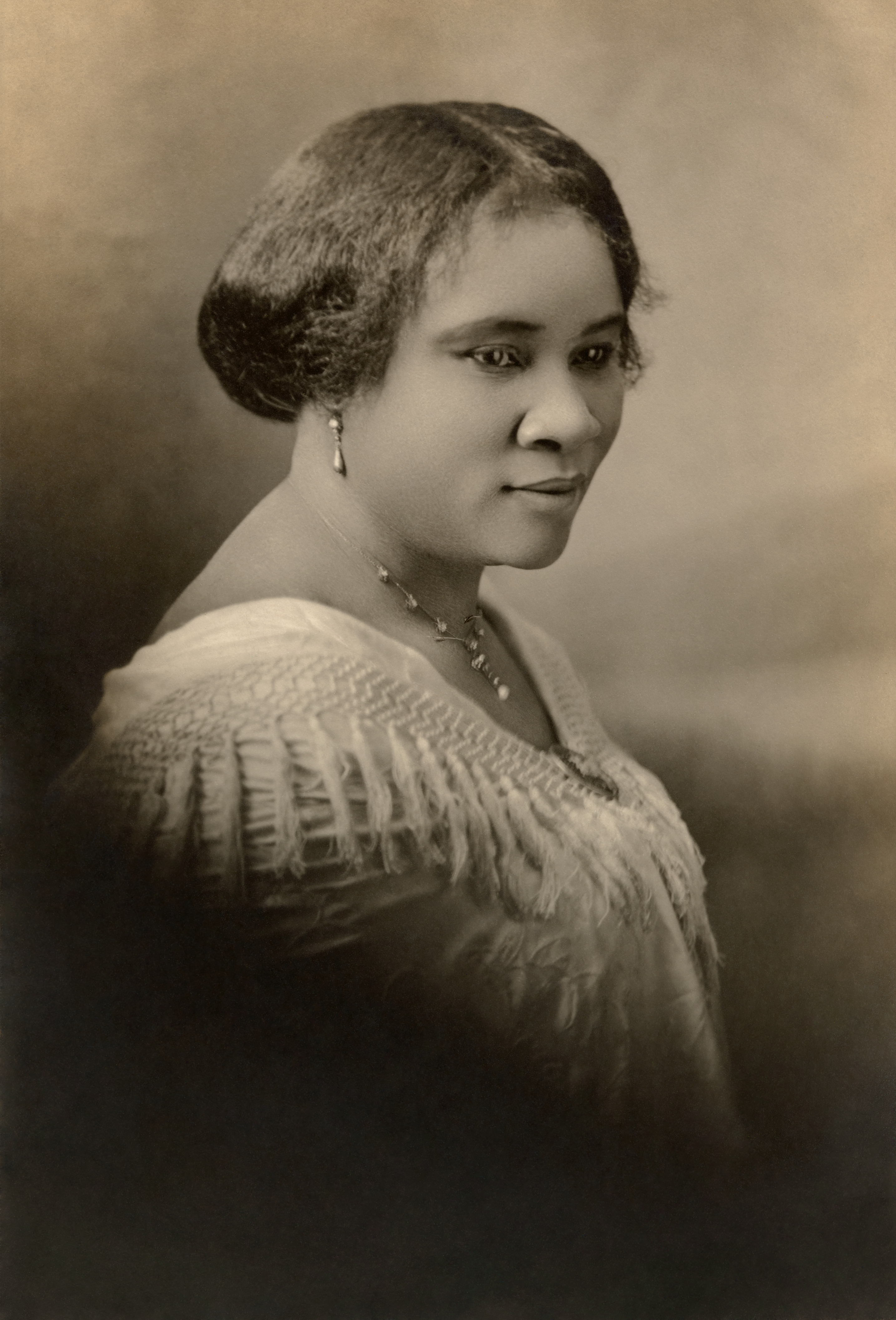
Madam C.J. Walker

Born Sarah Breedlove, Madam C.J. Walker developed a line of hair care products and scalp treatments specifically formulated for Black women in the early 1900s, building a manufacturing and sales empire that made her the first self-made female millionaire in the United States. Her business model, centered on a national network of trained door-to-door “Walker Agents,” created unprecedented economic opportunities for over 40,000 Black women at a time when domestic service was their near-universal employment option. She established beauty colleges and factory operations, including the Walker Building in Indianapolis, transforming hair care into a scalable industry.


Walker also pioneered integrated brand design, structuring her company’s visual identity through uniform product packaging, marketing materials, and a signature agent livery consisting of a white shirtwaist and black skirt. She strategically leveraged her wealth for political advocacy and social reform, funding anti-lynching campaigns, contributing to the NAACP, and lobbying President Woodrow Wilson for federal legislation. Her legacy of wealth redistribution continued after her death, with her estate funding scholarships and supporting the Harlem Renaissance through her daughter, A’Lelia Walker.

USA

North Carolina Mutual Life Insurance Company

North Carolina Mutual Life Insurance Company was founded in Durham, North Carolina, in 1898 by John Merrick, Aaron McDuffie Moore, and associates, and grew to become the largest Black-owned business in the United States - the “Largest Negro Business in the World” as it advertised.


Durham’s Hayti neighborhood concentrated Black-owned banks, law firms, dental practices, and retail businesses whose viability depended partly on the segregated market that legal Jim Crow created: white businesses served white customers, leaving Black professionals and entrepreneurs with a captive Black consumer market. When civil rights legislation dismantled formal segregation in the 1960s, Black businesses lost the captive market that had protected them without gaining equal access to white capital, white customers, or white distribution networks - a structural transition that destroyed many Black businesses not through violence but through market integration on unequal terms. NC Mutual survived; it remains operational, a rare exception to the pattern.

USA

Maggie Lena Walker

Walker became the first woman of any race to charter and serve as president of a bank in the United States when she founded the Saint Luke Penny Savings Bank in Richmond, Virginia, in 1903. She had built the bank out of the Independent Order of Saint Luke - a Black mutual aid fraternal organization - which she served as Right Worthy Grand Secretary from 1899, transforming it from a struggling insurance organization into a diversified financial institution that also published a newspaper and operated a department store.


The bank deliberately served Black Richmond residents who were excluded from white-owned banks; its depositor base included domestic workers, laborers, and small business owners whose accounts were too small for white banks’ minimums. Walker’s approach - building financial institutions within the existing infrastructure of Black fraternal organizations - represented the predominant model of Black economic institution-building in the Jim Crow era, using community social networks as the structural basis for financial enterprises.

Jamaica / USA / International

Marcus Garvey's Black Star Line

Garvey’s Black Star Line Steamship Corporation, incorporated in Delaware in 1919, was capitalized through the sale of shares at $5 each exclusively to Black investors - approximately 40,000 shareholders buying approximately $800,000 in shares. The company purchased three ships intended to operate a Black-owned transatlantic shipping line connecting the United States, the Caribbean, and Africa, supporting the UNIA’s economic self-determination program. The ships were in poor condition so the company lost money on every voyage.


The U.S. government prosecuted Garvey for mail fraud in 1923, specifically for advertising shares in a fourth ship before it was purchased; he was convicted and sentenced to five years. Critics of the prosecution noted that the specific conduct was common in the securities industry and that the prosecution was politically motivated - J. Edgar Hoover had been building a case against Garvey since 1919. The Black Star Line’s failure cost Black investors their savings and was used to delegitimize Black economic nationalism as a program.

USA

Reginald F. Lewis

Reginald F. Lewis engineered the 1987 leveraged buyout of Beatrice International’s overseas holdings for $985 million—then the largest offshore LBO by a U.S. firm—rebranding the portfolio as TLC Beatrice while proving Black general partners could price currency risk, union contracts, and European regulators without white co-sponsors fronting the deal.


Earlier, he built Wall Street’s first Black-majority law partnership, translating securities expertise into acquisition currency.


His nine-figure pledge to Harvard Law and the Baltimore museum bearing his name reshaped philanthropy expectations before illness ended his life at fifty, leaving debates about whether individual mega-success can substitute for systemic capital access for Black entrepreneurs.

USA

Robert L. Johnson

Robert L. Johnson co-founded Black Entertainment Television in 1980, using a shoestring loan to secure satellite time and persuade cable operators that Black viewers deserved original programming, not only syndicated reruns. BET grew from a narrow-channel experiment into a full-fledged studio, news desk, and awards franchise that proved Black audiences were an addressable market major advertisers had undervalued.


The network’s mix of music video blocks, comedy, and later scripted series reshaped how cable bundles priced “niche” demographics and how talent negotiated backend rights.


When Johnson sold BET to Viacom for roughly three billion dollars in 2001, the deal minted him as the first Black American billionaire on paper and sparked debate about ownership versus representation: critics asked whether conglomerate control would blunt the political edge early Black cable envisioned, even as the sale demonstrated unprecedented Black-led valuation in media markets.

Africa

African Development Bank and Intra-African Finance

The African Development Bank, headquartered in Abidjan, provides approximately $10 billion in annual development finance commitments to African governments and private sector entities. Its capital structure - majority African member states as shareholders - distinguishes it from the World Bank and IMF, whose voting structures give disproportionate power to the United States, Europe, and Japan.


Under President Akinwumi Adesina (appointed 2015), the AfDB’s “High 5” priorities represented an African-defined development agenda rather than one designed by external creditors, including industrialization and agricultural processing to build domestic value-adding capacity. Its documented scale of $10 billion annually across 54 countries is insufficient relative to Africa’s infrastructure investment gap, estimated at $100 billion annually - a financing gap that cannot be closed through African-controlled institutions alone without structural change in the international capital system.

USA

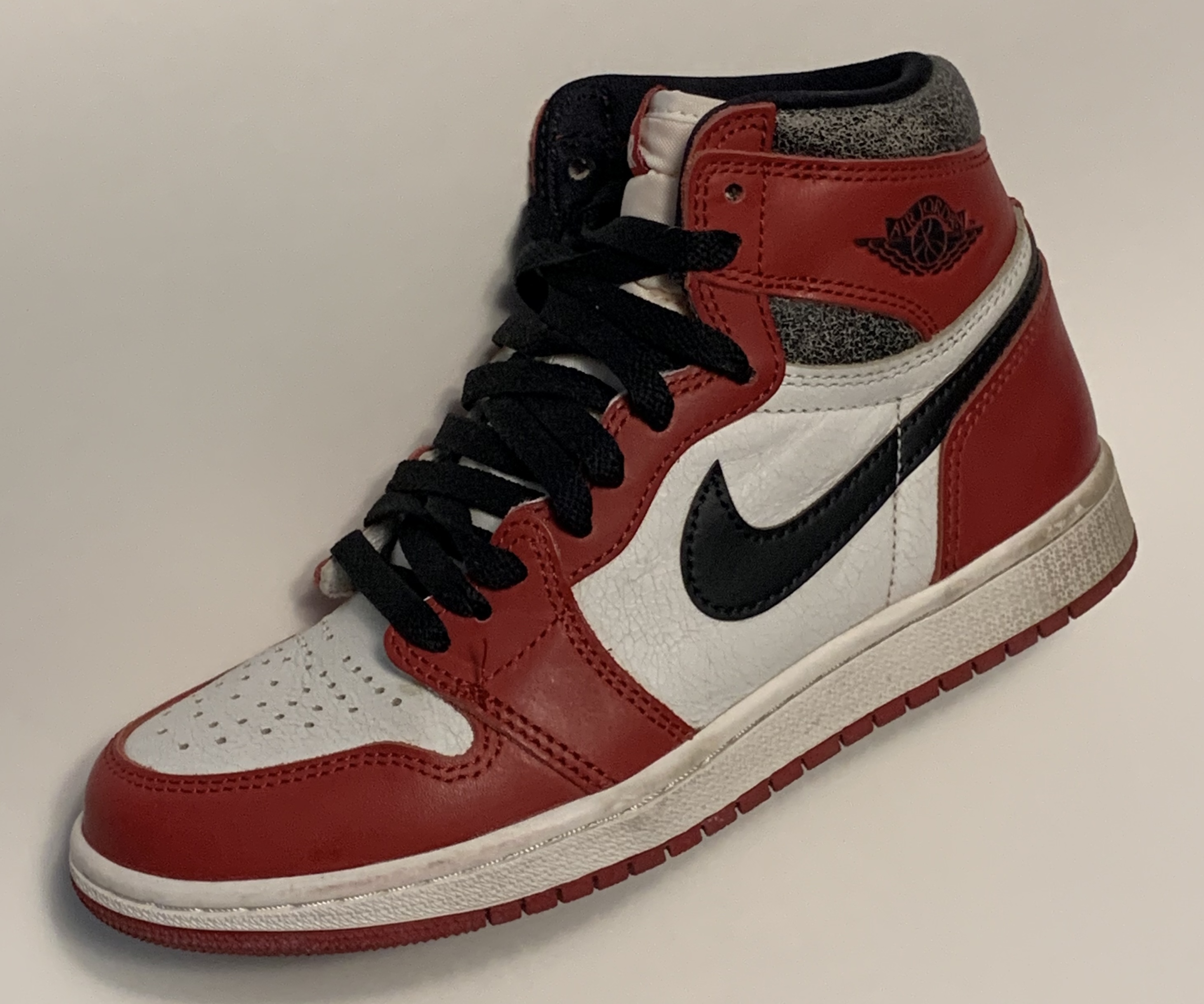
Jordan Brand

In 1984, Nike signed rookie basketball player Michael Jordan to an unprecedented endorsement contract worth $500,000 annually plus royalties, launching the Air Jordan line in 1985. The partnership transformed athletic marketing and was formalized in 1997 when Nike spun off the line into “Jordan Brand,” an independent subsidiary company. By 2022, Jordan Brand generated over $5.1 billion in annual revenue. While Jordan’s 5% royalty terms yield him an estimated $150–$250+ million annually—making him the wealthiest athlete-endorser in history—the contract structure highlights the disparity between Black athletic labor’s commercial output and its corporate compensation, with the vast majority of brand equity and capital gains accruing to Nike’s predominantly white shareholders.


The success of the Jordan Brand established a blueprint for the modern endorsement economy, which extracts immense value from Black athletic performance and cultural influence to build multi-billion dollar corporate assets. In response to these limits of royalty-only agreements, subsequent generations of Black athletes and performers—such as LeBron James, who negotiated a lifetime Nike deal estimated at $1 billion in 2015, and Serena Williams—have increasingly leveraged their commercial influence to secure equity stakes, venture capital networks, and direct ownership of their business ventures rather than traditional licensing terms.

Africa (Kenya, Tanzania, Ghana, Rwanda)

African Mobile Money and Financial Inclusion

M-Pesa, launched by Safaricom in Kenya in 2007, enabled mobile phone users to send money, pay bills, and receive payments without bank accounts - serving a population that was systematically excluded from formal banking infrastructure. By 2020, M-Pesa had approximately 42 million users across seven African countries, and mobile money platforms across Africa had an estimated 548 million registered accounts.


The economic significance is documented: a 2016 MIT study found that M-Pesa access increased household consumption in Kenya by 2% on average and lifted approximately 194,000 households out of poverty by enabling women to build savings and operate businesses. The platform was developed by Safaricom, a Kenyan telecommunications company, in response to observed informal money transfer practices among Kenyans without bank accounts - an African-originated financial innovation that predated comparable Western fintech by several years and addressed a market gap that Western financial institutions had not served.

USA

Parkwood Entertainment

Beyoncé founded Parkwood Entertainment in 2008 as a boutique film production unit (beginning with Cadillac Records), which expanded in 2010 into a full-scale management, music production, and entertainment company. By bringing her management, publishing, tours, brand partnerships, and recording operations entirely in-house, the company established a model for modern artist self-sovereignty, enabling her to secure full ownership of her master recordings and visual copyright.


Parkwood has produced major industry-shifting visual media, including the self-titled visual album Beyoncé (2013), Lemonade (2016), Black is King (2020), and Renaissance: A Film by Beyoncé (2023), as well as her record-breaking global stadium tours. This complete transition from performer to owner represents a critical structural shift in the entertainment economy, showing how commercial leverage can bypass traditional record-label dependency to establish equity and creative independence—a path historically blocked for earlier generations of Black women artists who were bound by restrictive royalty-only contracts.

Barbados / USA / France

Fenty Beauty

Rihanna built Fenty Beauty (2017) in partnership with LVMH into a cosmetics brand valued at approximately $2.8 billion - making her one of the wealthiest entertainers in the world, with her wealth primarily from business ownership rather than music performance.


Fenty Beauty’s launch included 40 foundation shades covering deep Brown and Black skin tones that existing cosmetics marketing had not served, explicitly addressing an exclusion. This documents the structural shift available only to performers with sufficient commercial leverage to negotiate ownership rather than royalty terms - a shift unavailable to earlier generations of Black women performers whose contract terms did not include equity.

Africa

African Continental Free Trade Area (AfCFTA)

The African Continental Free Trade Area, which entered into force in 2021 after ratification by fifty-four of fifty-five African Union member states, established the world’s largest free trade area by number of countries and the largest by geographic size, covering a market of approximately 1.3 billion people with a combined GDP of approximately $3.4 trillion.


The agreement is designed to increase intra-African trade, which historically has been extremely low - approximately 15% of African exports go to other African countries, compared to 68% for European countries trading within Europe - reflecting colonial-era trade infrastructure designed to move goods to European ports rather than between African nations. The structural obstacles to implementation include inadequate transportation infrastructure linking African countries, non-tariff barriers including border bureaucracy, and the persistence of colonial-era currency arrangements (the CFA franc, whose peg to the euro and whose reserve requirements held by the French Treasury have been criticized as a constraint on monetary sovereignty by fourteen West and Central African countries). AfCFTA’s economic potential is documented; its realization depends on political and infrastructure investment that was still at early stages as of 2026.

Who are we missing? Suggest an entry